
Waterfall vs. Agile is not a question of which project-management approach is universally better. The right choice depends on how stable the requirements are, how costly change will be, how quickly feedback is available, how much uncertainty exists, and how tightly scope, budget, or compliance must be controlled.
Net Profits Project Management Guide
Waterfall vs. Agile: How Small Businesses Should Choose
Choose a project approach based on uncertainty, feedback, dependencies, risk, and change—not because one methodology is fashionable.
Last reviewed: September 8, 2026 | Author: Cornelius Frazier, MBA
The Net Profits Bottom Line
Use a more sequential approach when requirements and dependencies are stable and late changes are expensive. Use a more iterative approach when learning, customer feedback, and changing requirements are central to success. Many small-business projects work best with a hybrid: fixed milestones and budgets around iterative work.
What Is the Waterfall Approach?
Waterfall describes a largely sequential way of managing work. Requirements are defined early, work progresses through planned stages, and later phases depend on earlier phases being completed or approved.
A simplified flow might be:
Requirements → Design → Build → Test → Launch
Waterfall works best when the business can define the outcome and process with reasonable confidence before execution begins.
Good Waterfall candidates
- office or restaurant build-outs with permits and construction dependencies;
- equipment installation;
- compliance projects with defined deliverables;
- data migrations with planned cutover steps;
- projects governed by a signed scope, budget, and acceptance criteria.
What Is Agile?
Agile is a set of values and principles centered on adaptability, customer collaboration, working outcomes, and responding to change. It is not one single project-management framework. Scrum, Kanban, and other approaches can be used to put Agile principles into practice.
The original Agile Manifesto emphasizes people and interactions, working results, customer collaboration, and responding to change.
One common misconception is that “Agile means sprints.” Scrum uses time-boxed sprints, but Agile work can also be managed through continuous flow, Kanban, or other iterative systems.
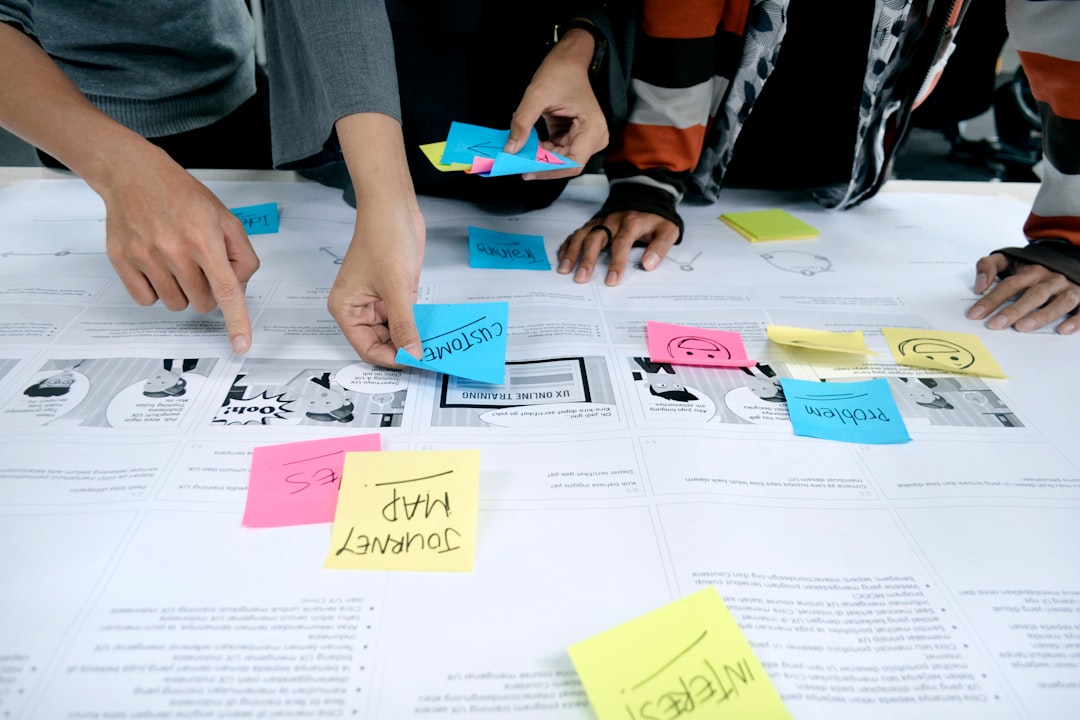
Waterfall vs. Agile: Side-by-Side
| Factor | Waterfall | Agile / Iterative |
|---|---|---|
| Requirements | Defined early | Can evolve through learning |
| Planning | Heavy upfront planning | Rolling planning and reprioritization |
| Delivery | Often at major phase or project completion | Smaller increments or frequent releases |
| Change | Managed through formal scope control | Expected and incorporated through reprioritization |
| Feedback | Often concentrated at milestones | Frequent and built into the process |
| Best fit | Stable, predictable work | Uncertain, discovery-heavy work |
Five Questions to Choose the Right Approach
1. How stable are the requirements?
If the scope is contractually fixed or unlikely to change, a sequential model can reduce confusion. If the business expects discovery and feedback to reshape the outcome, use a more iterative model.
2. How expensive is change?
Changing a webpage after customer testing is relatively inexpensive. Moving plumbing after a restaurant build-out is not. The higher the cost of late change, the more valuable upfront planning becomes.
3. How quickly can you get useful feedback?
If customers or users can test an early version, iteration can reduce the risk of building the wrong thing. If meaningful feedback is impossible until the project is essentially complete, the value of frequent iteration may be lower.
4. Are budget and deadline fixed?
Fixed price, fixed scope, and fixed deadline at the same time leave little flexibility. When all three are constrained, strong scope definition and change control become especially important.
5. Are there major dependencies or approvals?
Permits, lender approvals, inspections, vendor lead times, legal reviews, or sequential construction steps may require planned gates even if other parts of the project are iterative.
When a Hybrid Approach Makes More Sense
Small businesses often do not need a pure methodology. A hybrid model can combine fixed business constraints with iterative execution.
Example: a company launching a new service may fix the launch date, budget ceiling, compliance requirements, and minimum deliverables. Within those boundaries, the team can test messaging, pricing, onboarding, and sales scripts in shorter feedback cycles.
The key is to be explicit about what is fixed and what is allowed to change.
Small-Business Project Examples
| Project | Likely Fit | Why |
|---|---|---|
| Commercial build-out | Waterfall / Hybrid | Permits, dependencies, plans, inspections |
| New marketing campaign | Agile / Iterative | Creative and targeting improve through testing |
| Accounting-system cleanup | Hybrid | Defined controls plus iterative issue resolution |
| New online course | Iterative | Pilot lessons and learner feedback can shape the final product |
Whatever approach you choose, connect the project to a 90-day action plan and a clear accountability system.
Common Project-Method Mistakes
- Treating Agile as “no planning.” Agile still requires prioritization, capacity decisions, and clear outcomes.
- Calling every two-week schedule a sprint. Time-boxing alone does not create an Agile system.
- Forcing Waterfall onto discovery work. A detailed plan cannot remove uncertainty that only testing can resolve.
- Changing scope constantly without trade-offs. Iteration still requires decisions about time, capacity, budget, and priority.
- Choosing software before the process. The board should reflect the method—not define it.
Cornelius’ Take
The project method should match the economics of change. If late change is extremely expensive, plan more before execution. If learning is the main source of value, shorten the feedback loop. Most small businesses need practical judgment more than methodology purity.
Tools That Support Either Approach

monday.com can support phased projects, Kanban-style boards, milestones, dependencies, and iterative workflows. 
Office Timeline can help communicate a structured project roadmap. Use tools only after the operating approach is clear.
Affiliate disclosure: Net Profits Consulting may earn a commission if you purchase through certain partner links, at no additional cost to you.
Practical Next Step
Before your next project starts, write down what is fixed, what can change, when feedback arrives, and how expensive late changes will be. Your methodology choice will become much clearer.
Waterfall vs. Agile FAQs
Is Agile always faster than Waterfall?
No. Agile can shorten feedback cycles, but speed depends on scope, team capacity, dependencies, decision-making, and rework.
Can a small business use Scrum?
Yes, but only if the structure fits the team and work. Small businesses often benefit from borrowing useful Scrum practices without adopting every ceremony.
Can a project switch approaches halfway through?
Yes. If uncertainty, dependencies, or scope change materially, the management approach should adapt rather than remain rigid for the sake of a label.
Which method is better for a commercial real estate build-out?
Usually a structured or hybrid approach because permits, designs, inspections, contractors, lead times, and dependencies create sequential constraints.
Need Better Project Execution?
Net Profits Consulting helps small businesses design workflows, accountability systems, project rhythms, and operating controls.
About the author
Cornelius Frazier, MBA, is a business consultant, operations strategist, accounting professional, and Certified Business Educator with more than two decades of business and finance experience. Learn more about Net Profits Consulting.
